60 Days Moneyback Guarantee
Energy revolution System
The Energy Revolution System is more than a simple guide—it's a practical path toward gaining independence from rising energy costs and unreliable power grids.
Designed with everyday users in mind, it walks you through building a compact, low-noise generator using affordable parts and straightforward instructions.
$39.00
What is Energy Revolution System ?
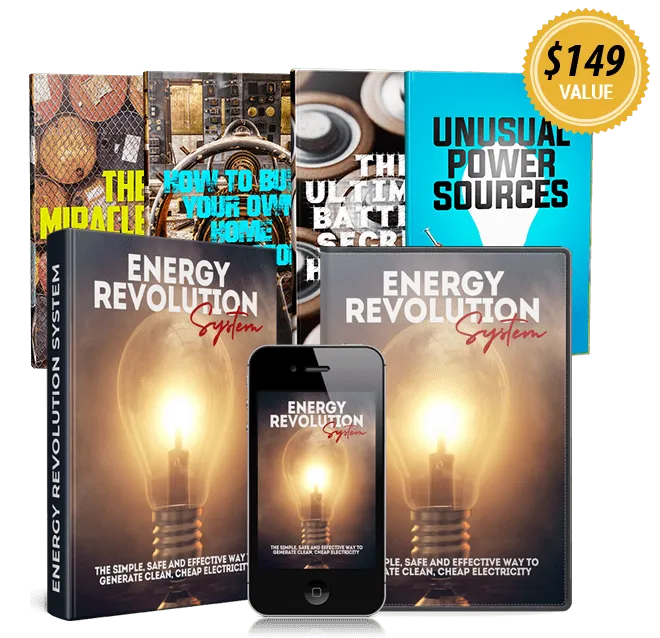
The Energy Revolution System is a downloadable DIY guide created by Michael Garnett, designed to show homeowners how to construct a home electricity generator inspired by Nikola Tesla’s 1894 bifilar coil patent. The program is entirely digital—no physical parts are shipped—and users receive immediate online access after purchase.
Garnett describes the Energy Revolution System as a rediscovered piece of overlooked energy technology that he became intrigued by during his time in Smiljan, Croatia, Tesla’s hometown. The program is presented as a hands-on project for individuals seeking an alternative to conventional utilities or a backup power option. All files can be accessed across multiple devices, making it easy to reference the instructions during construction.
At the core of the program is Tesla’s Bifilar Pancake Coil, an electromagnetic design featuring two tightly wound parallel coils. Garnett’s instructions show users how to recreate this configuration using parts obtainable from standard hardware stores. Depending on the size of the setup—ranging from small appliance-level builds to larger household versions—materials typically run $63 to $210. The full digital package includes PDF plans, instructional videos, detailed specifications such as wire gauges, troubleshooting advice, and options for scaling the device’s power capacity.
How does Energy Revolution System Works ?
The Energy Revolution System is presented as a modular, Tesla-inspired setup built to turn a modest electrical input into a steady, amplified output through carefully arranged coils, resonance principles, and tuned circuitry. Drawing on concepts that date back to Nikola Tesla’s early experimental work, this design reinterprets those ideas for practical, modern-day hobbyist applications.
A major appeal of the system is its accessibility. The guide breaks every stage down with clear diagrams, color-coded wiring instructions, and safety notes so users without a technical background can follow along with confidence. Its modular structure lets beginners assemble a basic unit for small loads—such as lighting, fans, or chargers—while offering the option to expand the setup later for larger household devices.
Core Coil Construction: The build starts with the bifilar pancake coil, which serves as the central component. This coil uses two parallel wires wound in a flat spiral to enhance inductance while limiting electrical resistance. The instructions provide exact winding details, spacing guidelines, and connection points, along with labeled diagrams showing voltage and polarity to streamline the process for newcomers.
Induction and Power Flow: After the system is energized, the magnetic field moves through the coil’s layered turns, generating electrical output through induction. This power can be directed into a battery bank for storage or fed through an inverter to run standard AC appliances. The design includes a magnetic feedback feature intended to recapture part of the system’s stray electromagnetic energy and feed it back into the circuit.
Power Conditioning: Once produced, the electrical output passes through diodes, capacitors, and other components to keep the signal clean and stable. Optional add-ons—such as charge controllers, smart switches, and energy monitors—can be integrated to automate distribution and maintain steady power during outages or periods without sunlight.
Expandable Architecture: Because the system uses a modular structure, additional coils or modules can be added as needed. Each new section connects directly into the existing layout, giving builders room to scale the system for larger loads in homes, cabins, RVs, or off-grid setups.
Resonance Tuning: The coils are intended to operate at frequencies that align with the system’s natural resonance. Adjusting this tuning reduces internal drag and enhances energy transfer, helping the system maintain efficient operation with minimal input.
Capacitive Smoothing: Integrated capacitors temporarily store and release small amounts of charge to even out fluctuations, improving voltage stability and reducing the likelihood of spikes that could affect connected devices.
Magnetic Energy Recovery: A closed-loop magnetic path is used to reclaim leftover electromagnetic energy that would typically dissipate as heat. This recovered energy is routed back into the circuit, supporting overall system efficiency.
Heat Management: The selected coil geometry and core materials promote heat dissipation, helping the unit remain within safe operating temperatures even under long-term use or heavy electrical load.
Calibration and Safety: The guide includes step-by-step instructions for checking polarity, verifying voltage, and implementing grounding. Protective components such as fuses are incorporated to reduce the risks of shorts, overloads, and wiring mistakes.
System Integration: Once assembled, the Energy Revolution System can be combined with existing solar arrays or battery banks. Its output terminals make it easy to expand or hybridize your setup, creating a foundation for a more independent power system.
The documentation takes you from the first cut of wire to the final load test, emphasizing careful assembly, reliable operation, and consistent performance. Calibration procedures ensure the unit functions within its intended electrical ranges.In essence, this program presents a hands-on method for exploring Tesla-inspired energy concepts using modern materials. With patience and attention to detail, users can build a functional alternative-power device designed to support a variety of everyday needs.
Benefits
Energy independence
Generate your own electricity at home
Eco-friendly & silent
Instantly cut your power bills by ~80%
Low cost to get this Blueprint
With larger-scale setups, results can be impressive. Some users report energy savings of 50%–80% or more, without spending $15,000–$20,000 on traditional solar panels. A few simple adjustments, completed in under 20 minutes, may help increase power output by up to 200%. The system is designed to run common household appliances, including refrigerators and AC units, and can provide backup power during outages. Its lightweight and portable design also makes it suitable for emergency use.
Scientific Evidence for The Energy Revolution System
This system is based on basic electrical principles that are already used in everyday technology, such as electromagnetic induction and coil design. These ideas were studied by early scientists like Nikola Tesla and are still used today in devices like motors, transformers, and power systems. Coils and electrical circuits can help control and improve how energy flows, but they do not create energy on their own. Any results depend on how the system is built, the materials used, and the energy source involved.
Frequently Asked Questions ?
If The Energy Revolution System works so well, why aren’t more people using it?
There are more than 102,244 happy families already using The Energy Revolution System but every serious prepper that uses it won’t brag about it. For some it’s the fear factor - most people think this is too complex to build. The fact is, The Energy Revolution System is easy when you have the proper blueprint.
How hard will this be to make?
This is so simple and easy to build, you’ll kick yourself for not taking up The Energy Revolution System earlier. The whole thing takes 2 hours, doesn’t require strength, and electric school. That’s all, and really there’s no excuse for not giving it a try. In fact, if you don’t want to lift a finger, you can still do this.
Just pay someone $50 to read the blueprints and to put together The Energy Revolution System for you. It’s more fun than LEGOs... and many of our clients are saying that their children love it.
How long will this take ?
It will take you a little over 60 minutes to read the blueprints. And that’s it. Building The Energy Revolution System takes under 2 hours if you’re slow. A lot less if someone’s helping you.
Don't Wait Any Longer! Join at Program Now!
Today's Price: $39.00
Copyrights Reserved